
 By
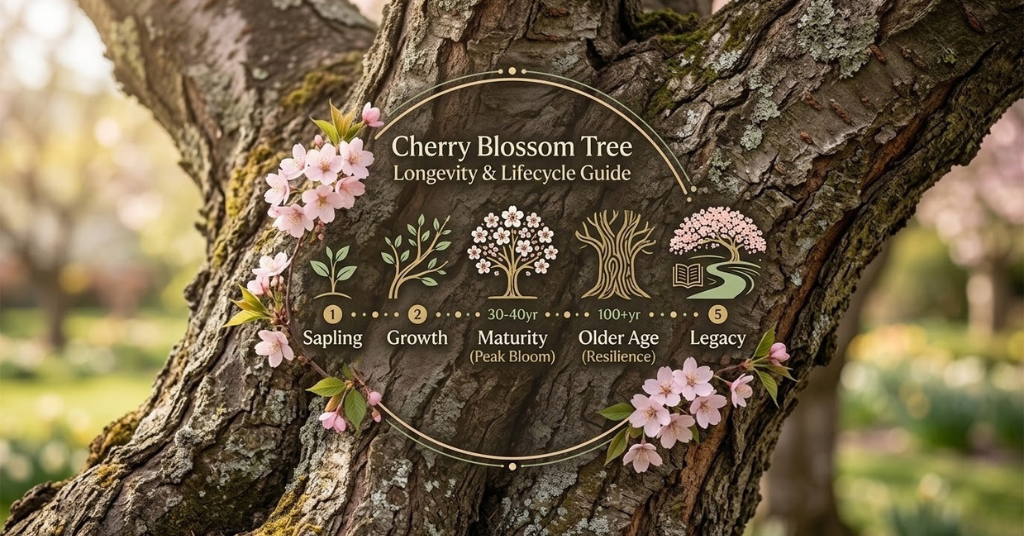
By Cherry blossom longevity is a core element of any landscape plan; while these trees typically live between 30 to 40 years, understanding their full tree lifecycle guide is essential for long-term success. With exceptional care and ideal environmental conditions, some species like the Prunus itosakura (Weeping Cherry) can live for over 100 years. While their annual blooming phase is famously fleeting, the tree’s overall journey is a complex balance of growth, resilience, and environmental adaptation.
Understanding the Lifespan by Variety
Contents
The longevity of a cherry tree is primarily encoded in its genetics, with different varieties offering vastly different life expectancies:
- The longevity of a cherry tree is primarily encoded in its genetics, with different varieties offering vastly different life expectancies:
- Yoshino Cherry (Prunus × yedoensis): Usually thrives for 30-50 years. If you want to establish your own, learning How to Grow Cherry Blossom Tree is the first step toward reaching this peak maturity.
- Kwanzan Cherry: Reaches 25-30 years. It prioritizes heavy flowering over structural longevity.
- Black Cherry (Prunus serotina): A hardy wild variety that can live up to 250 years in optimal forest conditions.
Critical Factors Influencing Cherry Blossom Longevity
To maximize the life of your tree, you must manage these three pillars of health which directly impact cherry blossom longevity:
1. Soil Conditions & Root Health
Root rot is a leading cause of premature death. These trees require well-drained, slightly acidic soil to maintain a robust root system. Compacted or waterlogged soil can suffocate the roots, leading to a rapid decline in the tree’s vitality.
2. Strategic Pruning
Cherry trees are susceptible to fungal infections. Knowing How to Prune a Cherry Tree is a life-saving measure that improves airflow and prevents the spread of diseases like silver leaf or canker.
3. Sunlight Exposure
A cherry tree requires at least 6 hours of direct sunlight daily to maintain its immune system and produce the energy needed for its intense spring blooming cycle.
Tree Lifecycle Guide: Expert F.A.Q.
Q: Why do cherry trees have a shorter lifespan than oaks? A: Cherry trees belong to the Prunus genus, which is biologically programmed for rapid growth and high reproductive output. This “live fast, bloom hard” strategy makes them more susceptible to pests and stress than long-lived hardwoods like oaks.
Q: Can I extend my tree’s life through fertilization? A: While nutrients help, over-fertilization can cause “succulent growth” that attracts pests. Balanced, organic mulching is often better for long-term health than harsh chemical fertilizers.

Written By
mahmuthaanazakli@gmail.com
Mahmuthan Azaklı is an actively engaged SEO consultant in the digital sphere. Based at Trabzon-headquartered Fennes Home, he stands out for his expertise in search-engine optimization. Having collaborated with companies across various industries, Azaklı continually sharpens his skills in web design, web development, and SEO strategy, delivering comprehensive digital solutions to clients. His work focuses on boosting digital visibility, driving organic traffic, and executing effective technical SEO initiatives.