
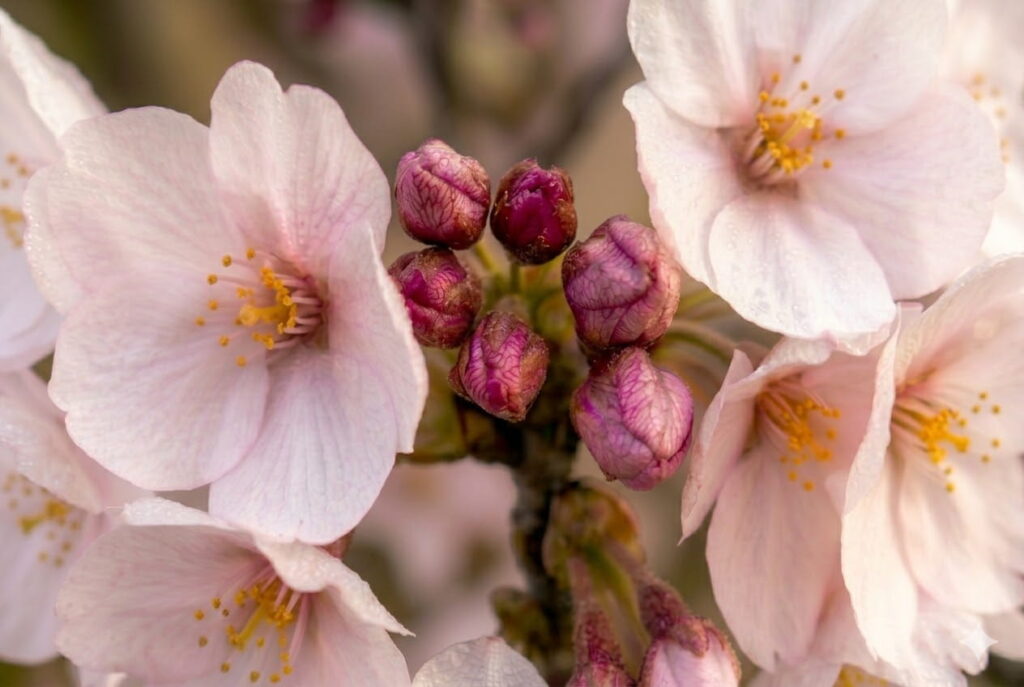
Akebono Cherry Blossom Tree
Featured Specimen

Akebono Cherry Blossom Tree

Stunning cultivar featuring large, fragrant pink blossoms that gracefully fade to white over time.

Botanical Specifications

Scientific Name
Prunus × yedoensis 'Akebono'
Family
Rosaceae
Origin
North America (Cultivar of Yoshino Cherry)
Hardiness Zone
USDA Zones 5–8
Bloom Timing
Early Spring (Late March to Early April)
Conservation Status
Not Evaluated (Commonly cultivated)

Exposure

Full Sun

Hydration

Moderate (Requires consistent moisture, well-drained)

Soil pH

6.0 – 7.5 (Slightly acidic to neutral)

Dormancy

Winter (Deciduous)

Akebono Cherry Blossom Tree A Color-Shifting Spring Spectacle

The Akebono Cherry Blossom (Prunus × yedoensis ‘Akebono’) is a more showy North American cultivar of the classic Yoshino tree. Its most captivating feature is the ability of its blossoms to shift colors. When the buds first open, they display a deep, vibrant pink; however, as the flowers mature, they gradually fade to a pure white. This transition creates a unique visual depth, showcasing various shades of pink and white simultaneously on a single tree.

Structural Form and Landscape Aesthetics

In its growth cycle, the Akebono develops a broad, rounded, umbrella-like canopy, reaching heights of approximately 7 to 11 meters. Compared to the standard Yoshino, it boasts larger flowers, ensuring that its branches are completely enveloped in a pink-and-white cloud during spring. In autumn, the foliage turns brilliant yellow and orange, maintaining seasonal interest. Thanks to its fast growth rate and disease resistance, it remains one of the most popular ornamental trees for large gardens and city streets.

Frequently Asked Questions

Detailed botanical inquiries regarding the Akebono Cherry Blossom Tree cultivar.

What is the difference between Akebono and traditional Yoshino?

Akebono is a cultivar of the Yoshino cherry; it features larger, deeper pink blossoms that gradually fade to white as they mature.

Does the Akebono Cherry Tree attract wildlife?

Yes, its fragrant spring blossoms are a primary nectar source for bees and butterflies, while birds often nest in its dense canopy.

How large does the Akebono Cherry grow?

It typically reaches a height and spread of 7–11 meters, developing a beautiful spreading, rounded crown over time.