
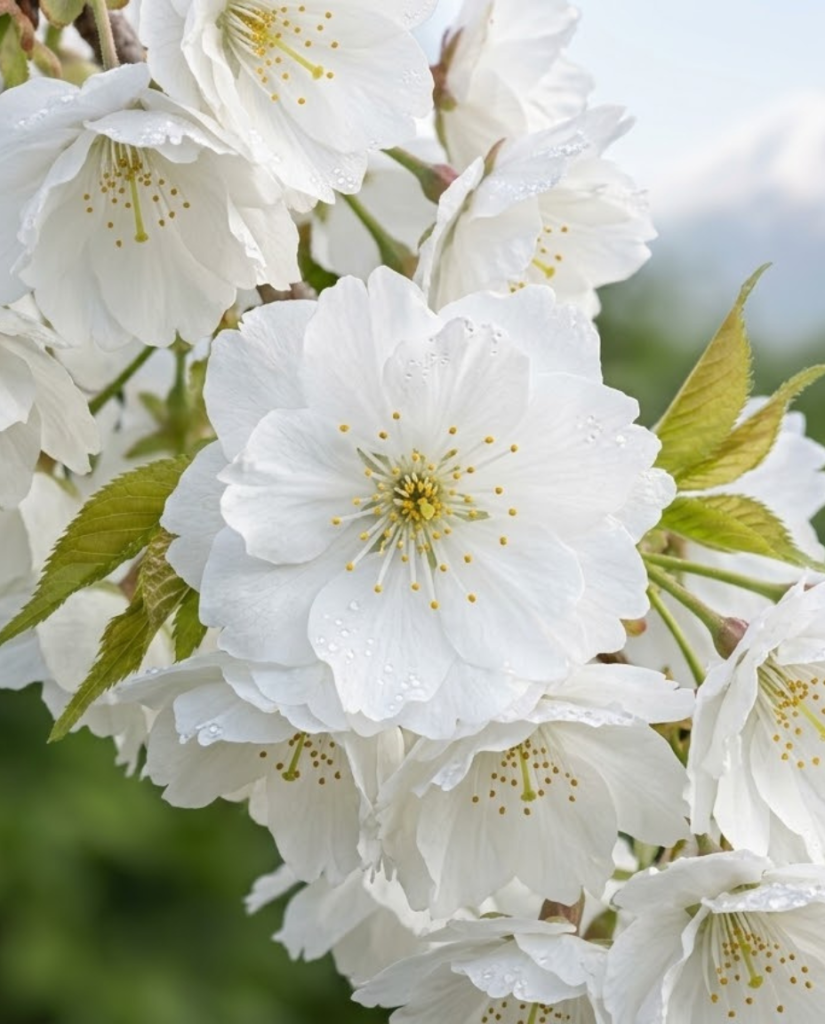
Shirotae Cherry Blossom Tree
Featured Specimen

Shirotae Cherry Blossom Tree

Also known as the "Mount Fuji Cherry," this variety is famous for its large, fragrant, snow-white semi-double blossoms and a unique, wide-spreading horizontal canopy

Botanical Specifications

Scientific Name
Prunus 'Shirotae' (Commonly known as Mount Fuji Cherry)
Family
Rosaceae
Origin
Japan
Hardiness Zone
USDA Zones 5–8
Bloom Timing
Early to Mid-Spring (April)
Conservation Status
Not Evaluated (Cultivated Ornamental)

Exposure

Full Sun

Hydration

Moderate (Requires well-drained soil)

Soil pH

6.0 – 7.5 (Acidic to Neutral)

Dormancy

Winter (Deciduous)

Shirotae Cherry Blossom Tree The Snow-White Elegance of Mount Fuji

The Shirotae Cherry Tree (Prunus ‘Shirotae’), widely known as the “Mount Fuji” cherry, is arguably the most exquisite among the white-flowering Sakura varieties. In the early days of spring, it produces pure, snow-white blossoms that drape the tree as if it were covered in a fine lace cloth. Unlike many other cherry cultivars, Shirotae features remarkably large, semi-double flowers. One of its most enchanting traits is the delicate, sweet almond fragrance it releases, making it a sensory delight that appeals to both sight and scent.

Horizontal Branching and Architectural Sophistication

Structurally, the Shirotae exhibits a silhouette that sets it apart from typical cherry trees. Rather than growing strictly upward, it has a strong tendency for horizontal branching, eventually developing a distinct flat-topped and wide-spreading umbrella canopy. This unique form provides an architectural depth to landscape designs, acting as a natural living sculpture. While it reaches a height of about 4 to 6 meters, its spread often exceeds its height. As the season ends, its dark green foliage turns into vibrant shades of orange and red, maintaining its status as an aesthetic focal point year-round.

Frequently Asked Questions

Detailed botanical inquiries regarding the Shirotae Cherry Blossom Tree cultivar.

What does the name "Shirotae" mean?

The name translates to "pure white cloth," referring to the tree's stunning, snow-white blossoms that cover its branches like fine fabric.

What makes the Shirotae's flowers unique?

Unlike many other varieties, its flowers are semi-double, exceptionally large, and possess a delicate, almond-like fragrance.

What is the growth habit of the Mount Fuji Cherry?

It is famous for its distinct horizontal branching and flat-topped canopy, which creates a dramatic, spreading silhouette in any landscape.