
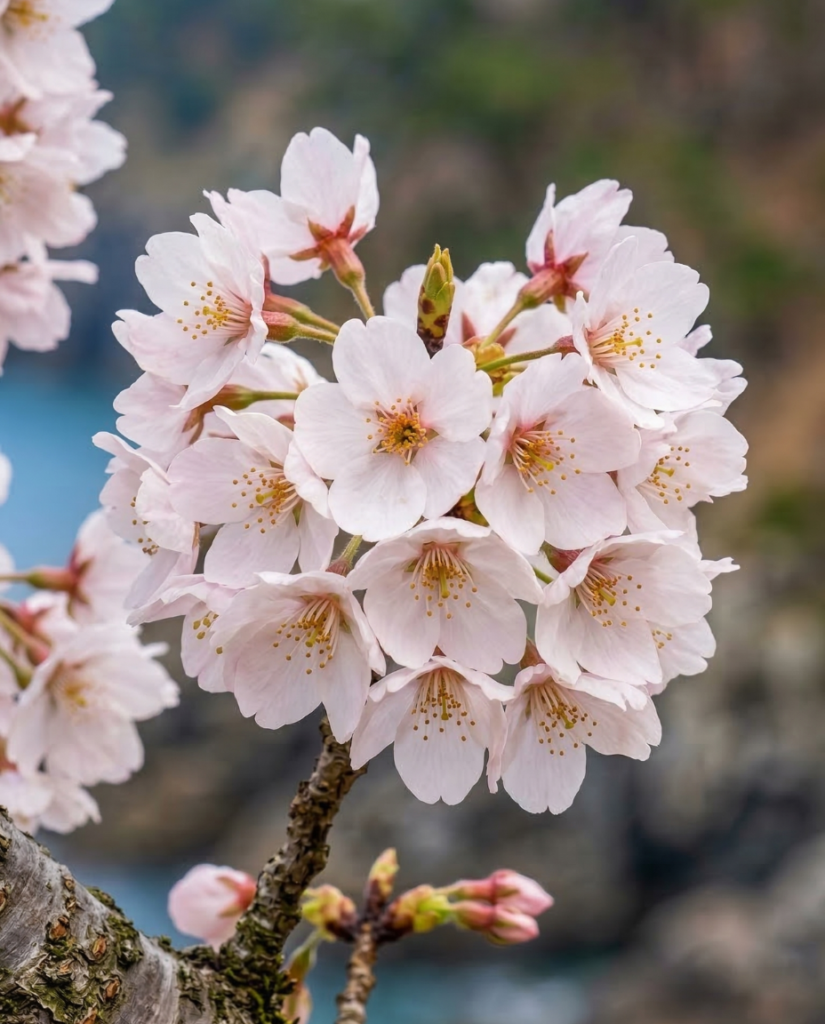
Takesimense Cherry Blossom
Featured Specimen

Takesimense Cherry Blossom

Endemic to South Korea's Ulleungdo Island, the rare and vigorous Takesimensis Cherry (Prunus takesimensis) stands out for its unique ability to thrive in wet, heavy soils where most other Sakura varieties fail. Showering its broad canopy with large clusters of pure white blossoms in early spring, it is a magnificent and resilient shade tree for challenging landscapes.

Botanical Specifications

Scientific Name
Prunus takesimensis
Family
Rosaceae
Origin
South Korea (Endemic to Ulleungdo Island)
Hardiness Zone
USDA Zones 6 - 8
Bloom Timing
Early to Mid-Spring
Conservation Status
Rare/Endemic (Native populations are protected, but available in horticulture)

Exposure

Full Sun

Hydration

High to Moderate (Tolerates wet and poorly drained soils much better than other cherries)

Soil pH

6.0 - 7.0 (Slightly acidic to neutral)

Dormancy

Winter

Advantages of Takesimensis Cherry Blossom

The primary advantage of the Takesimensis Cherry (Prunus takesimensis) is its extraordinary tolerance for wet soil. Unlike most Sakura varieties that suffer from root rot in damp conditions, this resilient tree thrives in moist and heavy clay environments. It is a vigorous grower, quickly establishing a large, wide-spreading canopy that provides excellent shade. Additionally, it produces a profusion of large, snowy-white flower clusters that are highly attractive to pollinators and offer a clean, bright aesthetic that stands out in early spring.

Disadvantages of Takesimensis Cherry Blossom

The main disadvantage is its rare availability; it is an endemic species from Ulleungdo Island and can be difficult to find in local nurseries. Due to its large mature size (up to 40 feet tall), it is not suitable for small gardens or confined urban spaces. Furthermore, its vigorous growth means it may require more frequent pruning than slower-growing dwarf varieties to maintain its shape and prevent it from overgrowing its surroundings.

Frequently Asked Questions

Detailed botanical inquiries regarding the Takesimense Cherry Blossom cultivar.

Why is the Takesimensis cherry tree recommended for wet areas?

Because its native habitat is the volcanic and often rainy island of Ulleungdo, the Prunus takesimensis has evolved a unique tolerance for damp, heavy soils that would typically cause root rot in other cherry blossom varieties.

What do the flowers of the Takesimensis cherry tree look like?

It produces large, stunning clusters of pure white, single-petaled flowers that contrast beautifully against its dark branches.

Does the Takesimensis cherry tree grow large?

Yes, it is a vigorous grower that can reach heights of 30 to 40 feet (9 to 12 meters) with a broad, spreading canopy, making it an excellent shade tree for large landscapes.